

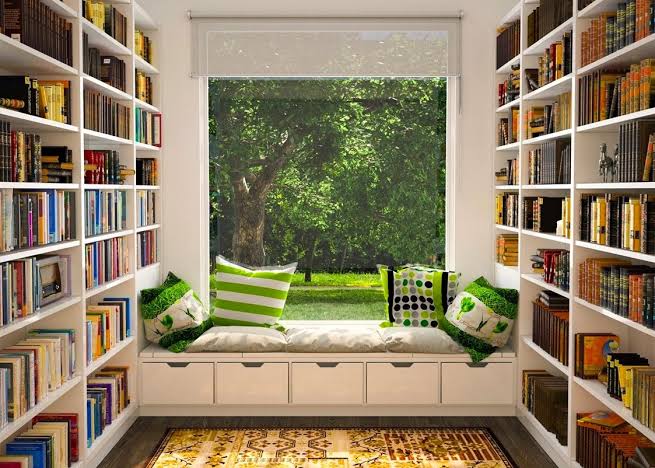
A comfortable reading corner belongs at the quiet edge of the kitchen, beyond the main work paths and appliance swings. During a kitchen redesign, plan it as a separate zone: a supportive seat, adjustable light, and storage that protects books and devices from heat, grease, and moisture.
Place the reading seat beyond the kitchen work zone
Start with the floor plan, not the empty corner that looks inviting in a photograph. A spot near a window or underused wall often works, provided it sits outside cooking and cleanup routes and does not block cabinet doors, appliances, or entry doors. The kitchen work triangle may guide the layout, but circulation clearance matters just as much.
A slim armchair suits a wider corner; a built-in bench or banquette makes better use of a narrow one. Leave enough room to sit down and stand up without interrupting someone at the sink or range.
Think about what the seat faces, too. A view of the room can feel connected, while a view away from the cooking area is often calmer. Keep the nook clear of direct oven heat, strong cooking smells, and noisy appliances where possible.
To estimate the space, mark the seat’s footprint on the floor with tape, then check that nearby doors and drawers still open and people can pass. Appliance specifications and accessibility needs take precedence over a preferred nook size.
Layer task and ambient lighting for comfortable reading
Kitchen task lighting is designed for food preparation, not reading. Overhead spots can create glare on a tablet or cast shadows across a page, so give the seat its own controllable light. An adjustable wall sconce suits a fixed bench; a directional pendant or floor lamp works where it can be positioned safely.
Aim for dimmable warm-white light, with a neutral setting available if you prefer a brighter page. Place the source opposite your writing hand to reduce shadows when reading or making notes. A separate switch lets you use the nook without turning on every kitchen fixture. Daylight helps. Window treatments can control glare and afternoon heat.
Fit Z library and other reading formats into compact storage
Keep print books out of splash and cooking zones. Shallow shelving, a recessed niche, or a narrow closed cabinet can hold a small rotation without taking over the room. Near a sink or range, a door protects books from grease and steam. A lift-up bench compartment can store books, though frequently used titles are easier to reach on a shelf.
A Free library or E-library option may reduce the need for shelves. For an e-reader or tablet, plan an outlet and concealed cable route before the cabinets, wall finish, or bench go in. That keeps charging leads from trailing across a seat or counter.
Digital sources can save space, but users should independently assess legitimacy, licensing, privacy, and security before using a service such as z-lib.me.
Another digital alternative is Free books. Check a service’s access terms and protections rather than assuming they are suitable.
Choose the smallest comfortable setup that fits your renovation
For a narrow nook, a built-in bench with a supportive back, washable cushion, small side shelf, and wall-mounted light is usually the cleanest arrangement. Keep it compact. In a wider corner, choose one armchair, a small table, and a closed cabinet rather than several loose pieces. Upholstery should tolerate spills, and the seat should be deep enough to relax in without projecting into circulation.
Before installation, settle these details with the renovation team:
- Seat dimensions and clearance around nearby doors and appliances
- Outlet position, cable route, and switch location
- Light direction, dimming, and glare from windows
- Storage protection from sink moisture, grease, and cooking heat
Confirm clearances against appliance specifications and applicable local requirements. Choose the smallest seat that remains comfortable and leaves the kitchen’s work routes clear.