

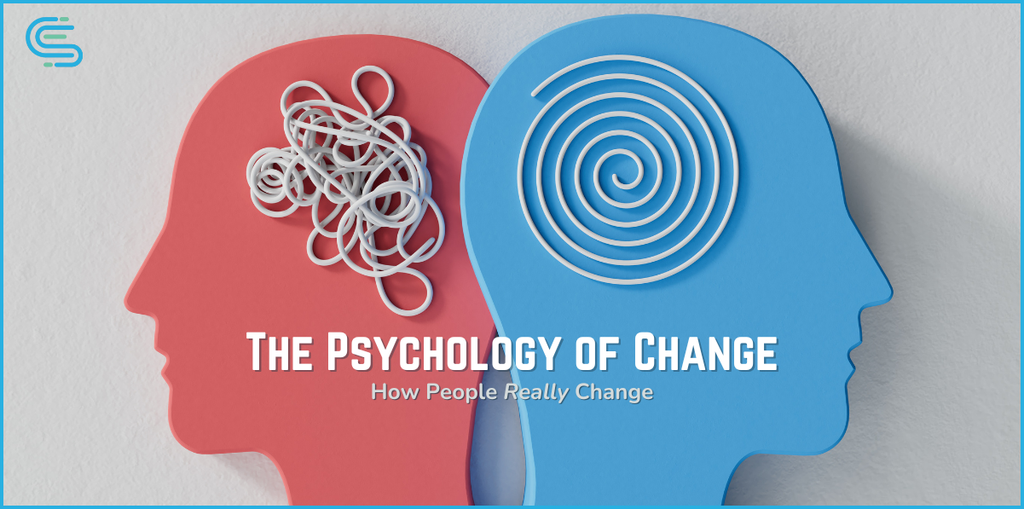
When professionals decide to pursue a career in coaching, they often start by researching fundamental core competencies: active listening, powerful questioning, establishing trust, and facilitating client growth. These pillars—standardized by governing bodies like the International Coaching Federation (ICF)—form the ethical and structural foundation of any professional coaching relationship.
However, as new practitioners begin working with real-world clients, they quickly encounter a frustrating reality: knowing what needs to change is rarely enough to create actual change.
A client can articulate their goals with perfect clarity, create detailed action plans, and express genuine motivation during a session, only to return the following week stuck in the exact same patterns of procrastination, imposter syndrome, or emotional reactivity.
When client breakthroughs stall, it is seldom a failure of goodwill or effort. It is a limitation of traditional, purely conversational coaching models. To facilitate deep, permanent transformation, coaches must understand the underlying cognitive architecture that governs human behavior.
Integrating Neuro-Linguistic Programming (NLP) into standard coaching competencies bridges the gap between conscious intent and subconscious execution, elevating a standard practice into a high-impact, results-driven discipline.
The Invisible Barrier: Why Conscious Willpower Fails
Traditional coaching operates primarily at the conscious level. Through open-ended dialogue, a coach helps a client analyze their situation, evaluate options, and set measurable targets. While this conscious reflection is essential for establishing direction, it only engages a small fraction of the mind’s processing power.
Habits, emotional reactions, core beliefs, and automatic behavioral patterns are controlled by the subconscious mind. When a client’s conscious desire (“I want to scale my business”) conflicts with a subconscious program (“If I put myself out there, I will be judged and rejected”), the subconscious program wins every time. This internal conflict is what creates self-sabotage.
Without psychological tools to address this internal friction, coaches are forced to rely on superficial accountability, urging clients to “try harder” or “stay disciplined.” This approach is exhausting for both parties and rarely produces lasting results.
By enrolling in a high-caliber life coach certification program that combines standard core competencies with Neuro-Linguistic Programming, practitioners learn to work with the brain’s natural structure rather than fighting against it.
How NLP Transforms Core Coaching Competencies
Neuro-Linguistic Programming is the study of how mind, language, and behavioral patterns interact. When layered onto foundational coaching standards, NLP transforms abstract competencies into precise, practical interventions.
1. Active Listening → Subconscious Calibration
Standard active listening focuses on hearing a client’s words and reflecting back their core meaning. While important for building rapport, verbal language accounts for only a fraction of the information being communicated.
NLP elevates active listening into calibration—the ability to observe micro-changes in a client’s physiology, vocal tone, breathing patterns, and eye movements.
When a client says “I’m really excited about this new project,” but their posture slumps, their voice flattens, and their eyes drop, an NLP-trained coach instantly recognizes the incongruence. Instead of taking the verbal statement at face value, the coach can gently probe the underlying tension, bringing hidden hesitation into conscious awareness.
2. Powerful Questioning → Precise Language Deconstruction
In traditional coaching, powerful questions are open-ended inquiries designed to promote reflection (“What is stopping you?” or “What do you want instead?”).
NLP refines this process through the Meta Model—a systematic linguistic framework designed to uncover generalized, distorted, or deleted information in a client’s speech.
For example, when a client states, “I can’t present in front of executive leadership,” an NLP-trained coach recognizes a modal operator of impossibility. Rather than offering encouragement, the coach asks precise, targeted questions:
By deconstructing the language used to maintain a limiting belief, the coach helps the client dismantle the mental structure holding that belief in place.
3. Establishing Trust & Rapport → Sensory Matching and Pacing
Building trust is often described as an organic, intuitive process that takes time. However, NLP demonstrates that rapport is fundamentally driven by subconscious feelings of familiarity and safety.
Through techniques like pacing and leading, coaches learn to align their communication style with a client’s preferred sensory representation system (visual, auditory, or kinesthetic). Matching vocal pacing, tone, and key sensory predicates creates rapid, deep rapport without feeling forced or artificial.
Choosing a life coach certification path that emphasizes real-time rapport techniques ensures you can establish psychological safety with clients from various backgrounds within minutes of starting a session.
The Core NLP Tools Every Modern Coach Needs
Integrating NLP into your coaching toolkit equips you with actionable protocols designed to resolve internal resistance swiftly and ethically:
Mastering these psychological interventions through a comprehensive life coach certification program equips you to guide clients through breakthroughs that would otherwise take months of conventional dialogue to achieve.
Comparative Advantage: Standard Coaching vs. NLP-Integrated Coaching
The structural differences between traditional, conversation-only coaching models and an integrated NLP approach highlight why depth of training matters:
Skill FocusStandard Conversational CoachingNLP-Integrated Advanced CoachingPrimary Level of WorkConscious mind, logic, and planningSubconscious mind, state management, and identityHandling ResistanceRelies on willpower and extra accountabilityNeutralizes subconscious blocks at the root levelObservation StyleListens primarily to verbal content and logicCalibrates micro-physiological and tonal shiftsQuestioning StrategyGeneric open-ended reflective questionsTargeted Meta-Model language deconstructionClient OutcomeIncremental progress with potential relapseRapid, permanent shift in state and behaviorElevate Your Expertise and Industry Standing
As the coaching marketplace continues to mature, clients and corporate organizations are actively seeking out practitioners who possess more than basic goal-setting strategies. They want skilled professionals who understand human behavior, cognitive processing, and emotional regulation.
Pursuing an accredited life coach certification that merges International Coaching Federation (ICF) core standards with advanced Neuro-Linguistic Programming gives you a decisive competitive advantage. You graduate not only with globally recognized credentials, but with the clinical depth and hands-on capability required to transform lives reliably and ethically.
At the iNLP Center, our training model prioritizes practical mastery above all else. By pairing self-paced online learning modules with unlimited, drop-in live peer practice sessions and direct feedback from master trainers, we ensure you build the unshakeable confidence, psychological depth, and practical expertise needed to thrive as a professional coach.