

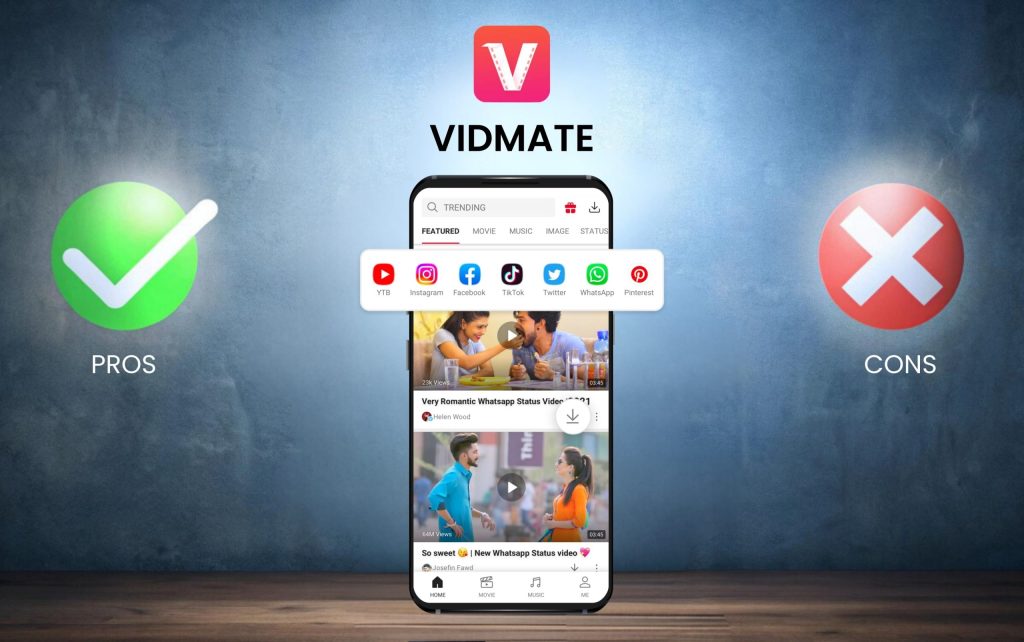
In the ecosystem of a free video downloader for android, usability is often determined not just by features but by how comfortably users can move through the application. VidMate focuses heavily on Android optimization, ensuring that its interface aligns with mobile interaction patterns rather than replicating desktop-style complexity. This mobile-first design approach plays a major role in making navigation feel natural and intuitive.
Mobile-First Layout Design Approach
VidMate’s interface is structured specifically for touch-based interaction. Elements such as menus, content sections, and action buttons are placed within easy reach, reducing unnecessary movement across screens. This layout approach is optimized for smaller displays, ensuring that users can access key functions without excessive scrolling or nested navigation.
The focus on mobile-first design helps eliminate confusion that often occurs when desktop-style interfaces are adapted poorly to Android devices.
Simplified Navigation Flow
The navigation system in VidMate is built around direct access rather than layered complexity. Users are not required to move through multiple deep menus to perform common actions. Instead, essential features are presented in a straightforward structure that supports quick interaction.
This simplified flow reduces cognitive load, allowing users to focus on content rather than figuring out where options are located.
Android System Compatibility Integration
As a free video downloader for android, VidMate is designed to integrate closely with Android’s native behaviour. This includes how it handles permissions, storage access, and background processes.
By aligning with Android’s system architecture, the interface feels more familiar to users who are already accustomed to standard mobile app behaviour. This reduces the learning curve and enhances usability across different Android versions and device types.
Consistency Across Screen Sizes and Devices
VidMate maintains a consistent interface structure across a wide range of Android devices. Whether used on smaller smartphones or larger screens, the layout adjusts without altering core navigation logic.
This consistency ensures that users do not need to relearn the interface when switching devices. It also supports a stable experience across different hardware configurations within the Android ecosystem.
Reduced Dependency on Desktop-Like Structures
Unlike desktop-based platforms or web-heavy tools, VidMate avoids complex multi-window or tab-heavy designs. Instead, it focuses on single-screen interactions that are more suitable for mobile usage.
This separation from desktop-style design improves clarity and ensures that users are not overwhelmed by unnecessary interface elements. It keeps the experience lightweight and focused on essential actions.
Visual Hierarchy and Content Prioritization
The interface uses clear visual hierarchy to guide user attention. Important elements such as search, playback, and download options are placed prominently, while secondary features remain accessible but less intrusive.
This prioritization helps users quickly identify what they need without scanning through cluttered screens, improving overall navigation speed and efficiency.